

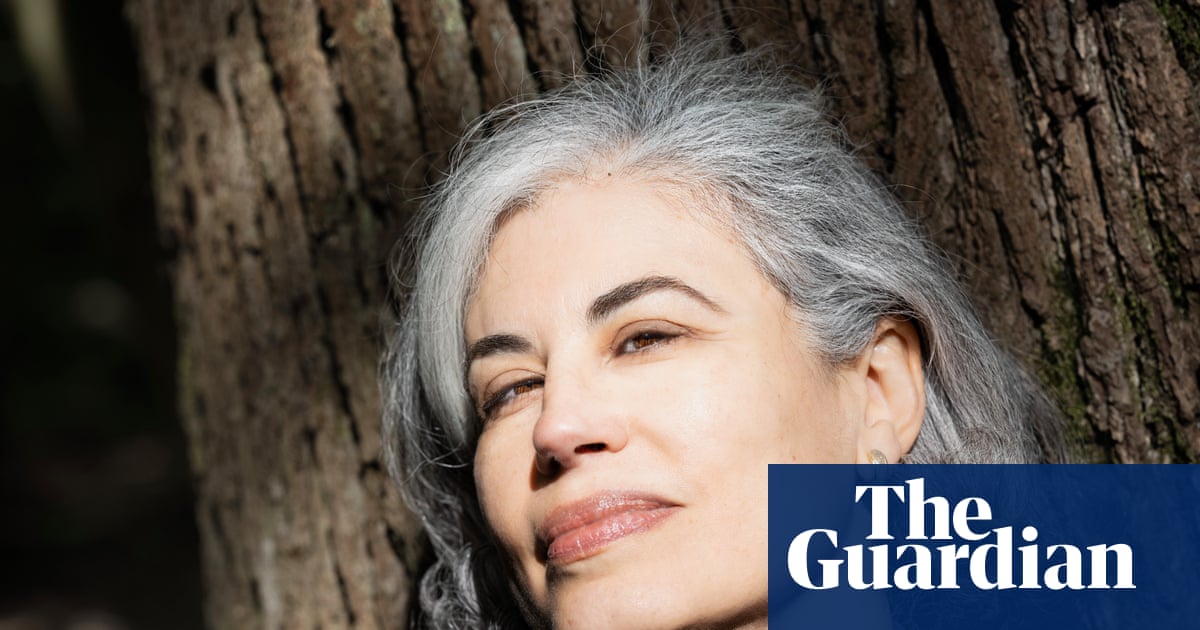
Natasha Walter is halfway through explaining how she came to be politically radicalised when a young woman approaches the cafe table. We two middle-aged women look like “the most trustworthy people here,” she says, so could we watch her baby while she grabs a coffee? Like the solid citizen she is, Walter doesn’t take her eyes off the pushchair parked by the cafe steps for the next five minutes, though all we can see of the occupant is a tiny swinging foot. Sorry, where were we? Ah yes, the groundbreaking feminist writer who famously argued in her 1998 book The New Feminism that Margaret Thatcher had broken down barriers for women was explaining why she no longer really believes it’s possible to be rightwing and a feminist, as Theresa May or Amber Rudd insist they are.
“I can’t support just any woman getting into power, because I think a system that leaves too many women in the shadows – that condemns too many women to poverty or worse – is not a feminist system, and I don’t think you can call yourself a feminist if you’re going to prop up that system,” she says, eyes still glued to the baby for whom we are briefly responsible. “It’s not my kind of feminism.” Her younger self, she admits, would have thought her too uncompromising. But something in her seems to have hardened, facing a world she sees as threatened by the rise of far-right authoritarianism on one hand and a climate emergency on the other. “In the past I always wanted to be a broad church, I always thought any woman can be a feminist, but now I really am feeling … maybe I’ve been radicalised.”
We’re meeting, this sunny spring morning, at the eco-cafe in north London’s Queen’s Wood, where Walter used to bring her own (now adult) children, to discuss her new book, Feminism for a World on Fire. Originally inspired by the climate crisis, it argues that women will suffer most from the fires and floods to come but that mainstream western feminism isn’t yet joining those dots sufficiently (though she is quick to acknowledge that plenty of individual activists have long made that connection). “There’s this line in the book that environmentalism without feminism is the patriarchy in the forest, but feminism without environmentalism is the women’s centre on a dead planet,” she says, bluntly. “We can’t pretend that it’s separate.”
But the book also reveals a broader impatience with parts of the women’s movement that she finds overly corporate, slick and focused on empowering individuals to climb the ladder rather than on broad social change. “Feminism in the mainstream has become very associated with quite a narrow kind of individualism – sort of, ‘You go, girl’, give zero fucks, your ambition and your aspiration is all-important,” she says. “I wanted to discover, or rediscover, a feminism that I felt worked better in that context (of crisis).” Having last bumped into Walter at the Green party’s annual conference, I ask if she is looking for a greener feminism, incorporating climate and social justice, and she lights up. “Eco-feminism I feel is right at the heart of what we need.”
She began feeling real urgency about the climate crisis around 2017, the year the Intergovernmental Panel on Climate Change began sounding warnings on the impact of warming by 1.5C, but also a time for her of “grief and bereavement, and thinking in starker terms about what was going on in the world”. (In 2017 Walter’s mother, Ruth, killed herself, a profound shock which formed the subject of her last book, Before The Light Fades.) In a time of personal and political angst, it’s as if her old ideas no longer felt big enough.
“All the threats that women face seem to be amplified by climate change,” she says now. “I think people get that, when resources are scarce, women might have less access, so, if there’s food scarcity, women and girls go hungry more than men and boys. Or if there’s a lack of resources in a family such that not all the children can go to school, it will be boys who get their education, and girls might be married off younger.” Bleaker still is the 2007 study she cites showing women were more likely than men to die in climate disasters. (In the 2004 Indian Ocean tsunami, for example, women were more likely to have drowned because they were less likely to have been taught to swim). That stark gender difference isn’t found in more egalitarian societies, she says, suggesting survival is linked to women’s status and role: if anything, one US study showed higher fatalities for men in a natural disaster, because they were more often the first responders.
But she also quotes research showing that American women displaced to trailer parks after Hurricane Katrina suffered a sharp rise in domestic violence, a pattern also evident after wildfires in Australia. If it’s true that, as she argues, “heat, floods, storms and droughts also make men more violent to women” even in countries where women supposedly have most agency, what does she think is going on?
“In places where people are under stress, men are under stress, do they take their stress out on women?” she suggests. “Maybe it’s not so different from what we see with the far right and anti-migrant feeling, that when a community feels that its own route forward is blocked, they need to feel better than someone else, so hierarchies assert themselves.” What matters, she argues, is to recognise the risk and work to prevent it. Similarly, she argues that where climate-related disasters lead to law and order breaking down or to forced migration, women will be more vulnerable to sexual violence. When she founded the charity Women for Refugee Women in 2006 to raise awareness of women fleeing persecution, she heard many such stories from women attacked by other migrants, smugglers, or border police along the way. “The women I worked with, they’d all in one way or another experienced gender-based violence and it wasn’t just in their home country, but also so often when they were on the move.”
In 2021, Walter stepped back from running the charity, feeling increasingly burned out. At first, she says, she had imagined that telling the stories of what women endured on the way through the asylum system would bring changes. But, despite some campaign successes, including limits on the detention of pregnant women, to her dismay she saw immigration policy growing only harsher. The fact that that has happened even under female home secretaries is, it seems, one of the things that radicalised her. “We’ve seen women rising through the system and the system hasn’t changed enough as a result, and it makes you think about how resistant the system is to change. It’s not enough to have women rising up into higher levels of that unequal system unless they’re there really wanting to change things.”
Yet this new boldness doesn’t seem to come entirely easily. Though Walter has weathered controversies in the past – including over her 2010 book Living Dolls, a presciently early take on hypersexualised culture which some critics found too judgmental of sex workers or women sleeping around, though she insists that was never the intention – she seems more apprehensive about a possible backlash now. “We’re writing into this moment where almost as soon as you’re putting things out there, you’re thinking about how it will be taken in bad faith.”
She is not the only writer lately to describe this fear, so what is spooking them? “It’s social media, I think. I’m not trying to romanticise the past – when I published The New Feminism (in 1998) I was startled by some of the negative responses I got from fellow feminists, who I felt were reading against what I’d actually written – but I think now it’s hard not to be very aware of that, particularly if you’re a writer who’s ever posted on Twitter (now X) or Bluesky … I have to guard against being overwhelmed by that and think: ‘No, this is the opinion that I’m putting out there.’”
We talk for a while about how hard many writers find it to balance saying difficult things and wanting to be loved, and whether getting older allows women to start caring slightly less about the latter. She pauses. “I think you’re right, I think there’s something about some of the issues I wrote about (where) I thought, ‘I’ve got to say it how I see it.’” She was bolstered by a pep talk from her 25-year-old daughter Clara, who suggested that if she got a hostile review she should screenshot it and post it on Instagram rather than hide it. “I said, ‘That goes against everything that I feel about social media, and she goes, ‘No, no, because unless the leftwing people see that the rightwing people hate it, they won’t buy it.’” It is, says Walter, utterly alien to her as an approach – “I’m so, ‘Let’s have a conversation!’” – but at least it made her laugh.
double quotation mark
It’s not enough to have women rising up into higher levels of an unequal system unless they really want to change things
And, perhaps, nowhere is that high-wire act harder for feminist writers now than in approaching the live rail that is transgender rights.
For the purposes of her book, Walter invites readers to interpret the word “women” however they choose. She has, she says, worked in transgender-inclusive organisations, and thinks it’s perfectly possible for trans women and biological women to organise together. But she also identifies some real and painful points of conflict between trans rights and women’s rights – for example over prisons, or sport – which is a red flag for some activists who deem it transphobic even to acknowledge these conflicts exist. Was she anxious about putting this in the book? “It would be weird not to lay out my stall, which is that I think biological sex is real, but I do respect the desire of people to live as the opposite sex. I really don’t like the way trans people are demonised as predators, so often as only predators, in some of the gender-critical language.”
But her main concern is that bitter divisions over all of this have made it harder lately for feminists to organise for women’s rights without being immediately embroiled in arguments about how they’re defining womanhood. “I talked to a lot of young women when I was writing this book, and a lot said to me, ‘I don’t want to go near to feminism, I don’t want to go to this women’s society because it’s just fighting about trans people, I can’t bear it’ – and that was said to me by trans-inclusive women and gender-critical women,” she says. It bothers her that at that Green party conference, gender-critical Greens had to set up stall outside the venue, having been denied a spot in the main hall; she would ideally like, she says, the issue to take up “less oxygen” in feminist circles.
What ultimately revived her faith in a movement with which she was clearly becoming disillusioned was a trip to meet the female Kurdish militia of Rojava, north-east Syria. They are famous not only for fighting Islamic State but for subsequently establishing a radically egalitarian regional system of government power-sharing between men and women at the heart of a highly patriarchal society. She doesn’t want to over-romanticise what they achieved, she says – not least because in the nine months since she turned her manuscript in, the new Syrian government has clamped down on it, driving the feminist experiment back into small beleaguered enclaves – but she was fascinated by their confidence and determination. “Their armed forces were literally fighting Isis, the most misogynist army in the world, who were enslaving Yazidi women and forcing women into full hijab in Rafah. I just think it was quite extraordinary to meet women with that kind of determination who had developed their thinking in a very revolutionary mode.”
But though she clearly found it refreshing, Walter admits it’s not a model that translates easily to the liberal west. Much as she admired the setup in Rojava, even she struggled with its emphasis on armed struggle and individuals making sacrifices for the collective good. “I am still a liberal feminist. I am who I am, that’s the culture I’ve been brought up in … I can’t imagine wanting to live in a society where women are just ‘handmaids to the revolution’ kind of thing.” If she is arguing – much as she originally did in The New Feminist, which maintained that the women’s movement had got too hung up on the idea of the personal at the expense of the structural – that a burning planet requires a more selflessly communitarian approach, then clearly for her that’s not without some caveats.
“The book goes into but cannot resolve the clash between the kind of collective society that we need now, the communitarian idea and that individualism,” she says. “But I want to be able to balance them rather than jettison, and that’s why I say twice that we cannot jettison the great insight of liberal feminism that a woman is human in the same way as a man is human, and must be able to raise her voice, realise her dreams and move forward. That is absolutely the case. And yet there are times when we have to see ourselves as part of the connected whole, so I hope that in the book there is that balance between the two.” There are no big answers here, only big questions. But asking them is, at least, a start.
Feminism for a World on Fire by Natasha Walter (Virago, £25). To support the Guardian, order your copy at guardianbookshop.com. Delivery charges may apply.
