

When Matt Hillier was in his 20s, he went camping with a friend who was a nurse. In the morning she told him she had been shocked by the snoring coming from his tent. “She basically said, ‘For a 25-year-old non-smoker who’s quite skinny, you snore pretty loudly,’” says Hiller, now 32.
The Guardian’s journalism is independent. We will earn a commission if you buy something through an affiliate link. Learn more.
Perhaps because of the pervasive image of a “typical” sleep apnoea patient – older, and overweight – Hillier didn’t seek help. It wasn’t until he was 30 that he finally went to a doctor after waking up from a particularly big night of snoring with a racing heartbeat. Despite being young, active and a healthy weight, further investigation – including a night recording his snoring – revealed that he had moderate sleep apnoea. His was classed as supine, the most common form of the condition, meaning it happens when he sleeps on his back, and is likely caused by his throat muscles.
“It’s weird because I’m normally quite quiet and polite. So to hear recordings of me snoring like a rhinoceros grunting was a bit shocking.” So, too, was his diagnosis: “I thought I was too young and healthy, and I had no family history. But I know my mum, sister and auntie are snorers. So it could be a genetic anatomical thing … we’ve all got bad throats.”
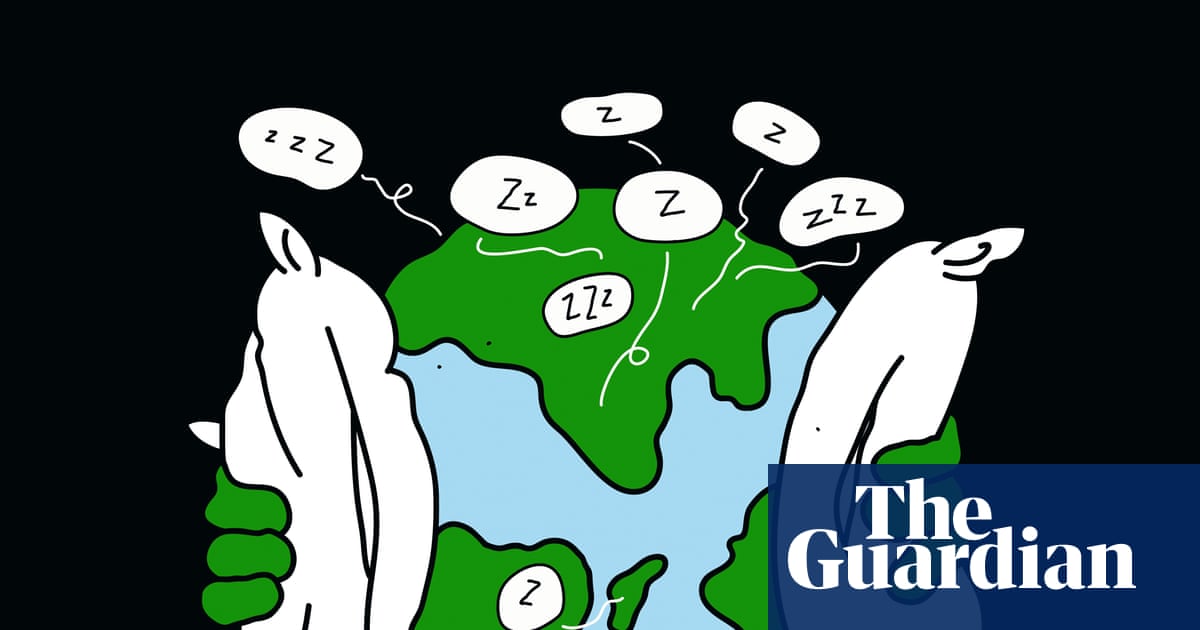
Over the past decade, according to experts, a snoring epidemic has begun to take hold in the world – and it’s more serious than you might think. Those grunts, honks and bellows people let out while they’re asleep have long been the butt of jokes, but they can often be a sign of trouble, and increasingly so. The British Snoring & Sleep Apnoea Association estimates there are around 15 million snorers in the UK. And while most of us do it occasionally, it seems we may be entering a new era of chronic and extreme snoring, driven by everything from pollution and rising temperatures to the obesity crisis.
“Snoring still carries a lot of embarrassment and humour, so people tend to joke about it instead of seeking help,” says Professor Ama Johal, clinical lead at Aerox Health and a consultant orthodontist. “They don’t connect it with their general health or quality of life.” But they should: chronic snoring can decrease the quality of our sleep, causing fatigue, low mood, poor concentration and brain fog. It’s even been linked to high blood pressure and cardiovascular problems.
The difference between snoring and sleep apnoea isn’t how loudly you snore; it’s whether you stop breathing
And that’s not all. “The snoring epidemic reflects the tip of the iceberg of a more sinister condition – obstructive sleep apnoea – which affects an estimated eight million adults in the UK,” says Ryan Chin Taw Cheong, currently the only NHS ear, nose and throat consultant and sleep surgeon who specialises in snoring and sleep apnoea full time. The exhausting and scary condition causes people to stop breathing in their sleep, dangerously lowering their oxygen levels. It raises the risk of high blood pressure, diabetes, stroke, heart disease and sudden death. It can also significantly increase the risk of being in a car crash: 10% of accidents can be linked to sleep apnoea. Plus emerging research has begun to establish a link between untreated sleep apnoea and dementia later in life. “I tend to think of loud, regular snoring as an early warning light on the dashboard,” Johal says.
Snoring happens when our airways are blocked when we’re asleep. As we breathe, we push air through our nose, throat and mouth. If something stops that, we make involuntary sounds as the tissues in the roof of the mouth, tonsils or tongue vibrate against each other. The sounds that escape can range from heavy breathing, vibrations and whistles to snorts and rattles. There’s no one-snore-fits-all. “Everyone snores in a unique way. It’s almost like a fingerprint,” Cheong says.
What counts as heavy or loud snoring is subjective; it’s often when the snoring can be heard through a closed door. Johal says it can be classed as more serious, disruptive snoring “when it starts to impact your sleep or the sleep of those around you”.
“Snoring and sleep apnoea share a common underlying mechanism and many of the risk factors are the same,” Johal adds. The difference between the two isn’t how loudly you snore; it’s whether you stop breathing as part of it. “Snoring becomes sleep apnoea when there are repeated pauses (apnoeas) or major reductions in airflow, usually with gasping or choking,” he says. “Bed partners of sleep apnoea patients often describe the sound they make as breathing stopping, followed by a snort.”
To get a diagnosis, you first need a sleep study. This can be carried out at home overnight using equipment that records your heart rate, the flow of air through your nostrils and your oxygen levels. It can also tell you how many times each hour you stop breathing in your sleep. “Fewer than five and you’re a bad snorer. But five or more meets the threshold for a diagnosis,” Johal says.
Interest in snoring and apnoea has surged in recent years, according to Cheong, as biohackers champion the role of sleep in health and longevity. It has sparked a cottage industry of TikTok Shop quick fixes for better rest, from nasal dilators it’s claimed widen narrow airways to mouth tape designed to encourage nasal breathing. Meanwhile, tracking devices such as Oura and Whoop, and apps designed to monitor not just sleep quality but the sounds we make while unconscious – such as SnoreLab, which rates each night’s snoring from zero to “epic” – have grown in popularity. For some, this has revealed they are secret super-snorers, prompting efforts to tackle the problem. But, he adds, the rise in snoring and sleep apnoea is “absolutely a thing” – and not simply the result of more tracking.
Genetics play a role in who snores or has sleep apnoea and who doesn’t – from narrow nasal passages to jaw shape, tonsils, tongue size and how much the throat muscles relax during sleep. So does body age and size, which is, in part, why prevalence of the condition is increasing, as the global population is getting older. “Like every other part of the body, as we age, the function and tone of the upper airway diminishes,” Cheong says. “Everything becomes more floppy and lax, including the palate, tongue and throat.” By the age of 70, snoring is present in nearly one in two people.
People don’t recognise signs of a medical condition. They assume tiredness, headaches and irritability are just part of modern life
The population in the UK is also getting heavier. “For many patients, snoring often gets dramatically worse after even modest weight gain because it exacerbates the narrowing of the airway,” Johal says. Still, he cautions against oversimplification. Many people who are not overweight snore, and weight loss alone is not guaranteed to resolve the problem.
Some of the reasons for the rise of sleep apnoea and heavy snoring go beyond the way our bodies are built and instead show how the world itself is changing. Pollution may play a part. While air quality in the UK has improved in recent years, dangerous levels are often still reached. “There’s growing evidence that outdoor and indoor air pollution are linked with more habitual snoring. Traffic-related pollutants and fine particles irritate the upper airway, causing low-grade inflammation and swelling that narrow the nasal passages and throat,” Johal says. “Studies have shown higher rates of regular snoring in people living near busy roads or in homes with damp and poor air quality.”
The higher likelihood of heatwaves in the UK could have an effect on how much noise we make in our sleep, too. “Warm, stuffy bedrooms dry and irritate the nose and throat, promote congestion and fragment sleep, interrupting the sleep cycle, all of which make the airway more unstable and noisy,” Johal says.
A recent study from Flinders University in Australia predicts cases of sleep apnoea are likely to double over the next 75 years as a direct consequence of global heating. Researchers found that higher temperatures lead to less, lower quality and lighter sleep (the sleep stage where the condition flourishes). They believe it will affect everyone, not just those with pre-existing risk factors. Untreated sleep apnoea is already estimated to cost the US economy $87bn a year in lost workplace productivity and sick days. Dr Bastien Lechat, a senior researcher who co-authored the Flinders study, says he found the magnitude of the link between sleep apnoea and temperature “striking”. He’s particularly concerned because “sleep is the third pillar of health, alongside nutrition and exercise, and is essential for physical and mental wellbeing”.
Recently, there has been a rise in another kind of atypical sleep apnoea: what doctors are calling “social apnoea”, where heavy snoring tips over into something more serious at the weekend. “Alcohol depresses the muscles of the throat, so it becomes more floppy,” Cheong says. Even social or passive smoking can irritate your nose and throat, cause swelling, block your airway and make it more likely you’ll snore. Vaping may have a similar effect, but research is lacking.
Ciara Bowdler teeters on the edge of this category. After a housemate revealed she had been snoring particularly loudly after a night out, the then 28-year-old from Kent downloaded SnoreLab to record and play back her snores. Typically, newcomers to the app score around 25. Bowdler, whose recording was peppered with epic snores, scored 99, putting her in the top 15% of 15 million users. “Of course, it was funny because snoring is funny to hear. But it was also embarrassing. Snoring is seen as such a male thing, and it just seems a bit gross. That’s what’s frustrating as a female. There’s a different stigma attached,” she says.
By tracking what she ate and drank each day, Bowdler, now 32, learned there were three main culprits: red wine, social smoking and late-night takeaways. “God forbid a girl has a good time,” she jokes. By drinking fewer glasses of wine (two mediums seems to be the limit), eating earlier and bulk-buying stick-on nasal strips, used to widen nasal passages, she’s managed to get her score down to a respectable 14.
Perhaps surprisingly, given its noisy reputation, it’s thought up to 90% of people with sleep apnoea in the UK are undiagnosed, and the health consequences of this are estimated to cost the NHS £28m a year. “One of the most surprising things about sleep apnoea is how easy it is to live with it for years without realising, because the breathing interruptions happen while you sleep,” says Professor Esther Rodriguez-Villegas, director of the wearable technologies lab at Imperial College London and founder of wearable medical device company Acurable. “It’s also widely underreported because most people simply don’t recognise their symptoms as a sign of a medical condition. Many assume that tiredness, headaches, irritability or poor concentration are just part of modern life.”
Of the 90% of undiagnosed cases, a significant portion are women. Rodriguez-Villegas says, “Women underreport symptoms of snoring and are less likely to come forward and say, ‘Hey, I’ve got a problem.’” The condition also tends to look a little different in women: “Their symptoms tend to be quieter and less stereotypical, with less dramatic snoring and gasping. Some of the most significant cases involve minimal or very subtle snoring. Women also have more complaints of fatigue, headaches, poor mood, fragmented sleep or difficulty concentrating,” Rodriguez-Villegas adds.
As 58-year-old Mariana Sawyer knows, these symptoms can easily be dismissed as menopause related. The assistant bank manager from Luton felt shattered for years, but noticed her tiredness and occasional snoring got much worse after her 50th birthday. “It coincided with menopause, so it was really difficult to pinpoint what it was. I was also suffering from nasal problems, but knew this was very common with menopause,” she says. When her husband, Steve, played her a video of her snoring, she was horrified: “It was quite a deep, loud, hollow snore. It was almost like a roar, with choking and gasping for air. I’d wake up with a really dry mouth. My tongue would be white from dehydration. I was probably a little bit in denial for a while. You don’t feel very good about yourself in menopause anyway. Throw this into the equation and it really wasn’t a nice time.” When she eventually had a sleep study, Sawyer was shocked to learn that it wasn’t just menopause; she had sleep apnoea and was stopping breathing up to 27 times an hour.
Right now, the treatment landscape for sleep apnoea, if you’re going through the NHS, is far from ideal. You may be eligible for “sleep surgery” to optimise your airflow, but relatively few people meet the criteria, such as having a deviated septum (when the wall between nasal passages is off centre) or large tonsils. Johal says surgery is “very unpredictable in its outcome” anyway, so it’s often reserved for patients who haven’t responded well to other treatments.
The go-to option is a continuous positive airway pressure (Cpap) machine, which pumps air into a mask that covers your mouth and nose as you sleep. It improves the quality of life for some patients, bringing down their blood pressure and reducing the risk of cardiovascular problems. It’s also gained a surprising celebrity following, with snorers such as Amy Poehler and Jack Black raving about the treatment. But it’s no perfect solution. If your sleep apnoea is considered not quite bad enough to get a Cpap machine through the NHS, buying one privately costs hundreds of pounds, and one in three patients can’t tolerate it. “I have high cheekbones and none of the masks would fit,” Sawyer says. “The air was blowing so violently, it was seeping out the sides, burning my eyes and creating an even worse sleep pattern.”
There is a new kid on the block: an implant known colloquially as the “sleep pacemaker”. “It stimulates the hypoglossal nerve, which controls the tongue, and pulses it forward to unblock the airway. Patients can control the device with their smartphone. The nerve implants will be all the rage for the next decade because it’s a really big step forward,” Cheong says. For those who don’t qualify, there may be an alternative: a mandibular advancement device – essentially a custom-fitted mouthguard that shifts your jaw forward as you sleep to open up your airway.
When it comes to heavy snoring, developments are happening here, too. There’s myofunctional therapy – exercises that strengthen the muscles around your palate, throat and tongue. Pelvic floor exercises for the mouth, if you will. SnoreLab’s companion app, SnoreGym, teaches users how to do oral workouts such as “tongue curlers”, where you push your tongue against the roof of your mouth and then slide it back as far as it’ll go. “Some early-stage studies are looking at things like didgeridoo-style breathing training or conch blowing to strengthen airway muscles,” Johal says. He also mentions “positional therapy – wearable technology that gently nudges people off their backs. Sleeping on your back is a major aggravator because gravity lets the jaw and tongue fall backwards.”
There’s even work being done on “a medical pill for sleep apnoea that increases the tone of the upper airway, which may help with snoring. It’s all very clinical trial-based at the moment. If it does hit the UK, it’s going to be at least eight years before we see it on the market,” Cheong says.
Until then, we may have to learn to outsmart our snoring. Shifting on to your side can reduce your snores. So can tweaking the temperature of your bedroom. Or, like Bowdler, you could try tweaking other lifestyle factors: “I went away a couple of weekends ago on a bridesmaids’ weekend and forgot my nose strips. I ate early, only had two glasses of red, stopped drinking by 7pm and went to sleep at 10pm. According to my app, I had no snoring.”
That said, experts caution that if your snoring is super-loud, regular, or comes with other symptoms, such as tossing and turning at night, feeling wiped out, headaches or a dry throat, then it’s considered a health problem and it’s important to see your GP.
Just as Johal says snoring is an early warning light on the dashboard for our personal health, it seems the epidemic is a warning on a worldwide scale, too. It’s one of many reminders that our mistreatment of the planet has already begun to affect our wellbeing and will continue to do so – perhaps in ways we can’t yet imagine.
